AC repair colorado in Denver, CO
Connect with an independent local provider for cooling problems in Denver.
AC Repair Colorado
TownDenver, CO
CountyDenver
ZIP80202, 80203, 80204, 80205, 80206, 80207, 80209, 80210, 80211, 80212, 80214, 80216, 80218, 80219, 80220, 80221, 80222, 80223, 80224, 80227, 80230, 80231, 80235, 80236, 80237, 80238, 80239, 80246, 80247, 80249
- 6years of experience
- 2,200customers served
- 13team members
- Since 2019serving homeowners
AC repair for Denver homes, from Capitol Hill to Green Valley Ranch
City Park, home to the Denver Zoo and Denver Museum of Nature & Science, sits among neighborhoods with many different home ages and cooling setups. AC repair in Denver can involve a century-old brick bungalow in Wash Park, a Capitol Hill condo, or a newer house in Green Valley Ranch. The city spans the South Platte River corridor and extends east onto the High Plains, where sun, wind, and fast-moving storms affect outdoor equipment. We connect callers with independent providers in the area; the technician who comes out assesses the specific system and property.
Summer heat and changing humidity
Denver's summer afternoons can be hot, while thunderstorms can quickly change humidity and temperature. Long cooling cycles can expose airflow problems, low refrigerant, and controls that are not responding correctly.
Basements, crawl spaces, and attics
Older Denver houses often place ductwork, an air handler, or return paths in basements and attics. Restricted returns, disconnected ducts, and insufficient insulation can make rooms cool unevenly.
Drainage around cooling equipment
Heavy rain can collect near a condenser unit when grading or downspouts direct water toward the foundation. A technician can check the equipment pad, condensate drainage, and signs of water affecting electrical components.
Storms and electrical supply
Hail, wind, and lightning-producing storms can interrupt power or damage exposed components. After a storm, a provider can inspect disconnects, wiring, breakers, and the outdoor cabinet before restarting the system.
How AC repair works in Denver houses and condos
Many Denver properties use a central air conditioner with a furnace-based air handler, while others have a split system air conditioner, a heat pump, or a ductless mini split. The outdoor condenser unit rejects heat, and the indoor evaporator coil absorbs it. When an air conditioner not working complaint comes in, the provider needs to identify which part of that cooling path has failed or is restricted.
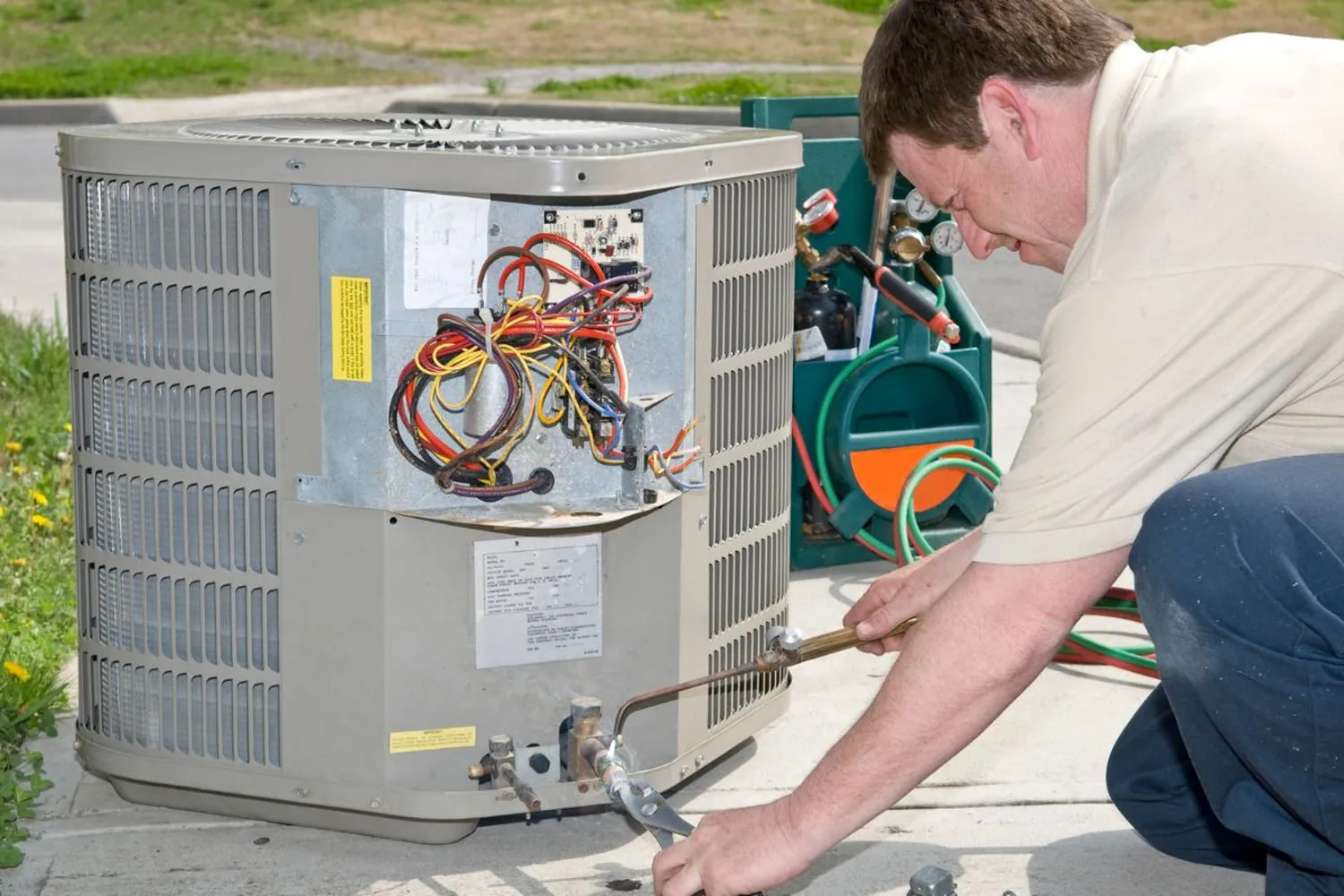
Common calls include warm supply air, a system that starts and stops repeatedly, ice on the refrigerant line, weak airflow, and a compressor that will not start. Air conditioner repair may involve testing capacitors and contactors, inspecting the blower and coil, checking refrigerant pressures, or clearing a blocked drain. AC system repair should follow measured readings rather than assumptions, especially when a compressor or evaporator coil is involved.
During an ac unit repair visit, the technician typically checks the thermostat call, electrical connections, filter condition, supply and return airflow, and outdoor operation. They can explain the observed fault, the parts involved, and any options before work proceeds. Seasonal ac maintenance can also include coil cleaning, drain checks, and inspection of accessible components to reduce avoidable cooling interruptions.
AC repair colorado work in Denver
| Part | What it does | Signs it is failing |
|---|---|---|
| Thermostat | Signals the cooling system when to start and stop. | Incorrect readings, blank display, or cooling that does not start. |
| Air filter | Catches airborne debris before air moves through the system. | Visible dirt, weak airflow, or more dust around vents. |
| Evaporator coil | Absorbs heat from indoor air during cooling. | Warm air, ice buildup, or reduced airflow. |
| Condenser unit | Releases heat outdoors through the compressor, coil, and fan. | Warm air indoors, unusual outdoor noises, or a fan that does not run. |
| Condensate drain | Carries moisture collected during cooling away from the equipment. | Water near the indoor unit, drain overflow, or musty odors. |
Denver weather puts different demands on cooling equipment
Denver's elevation, strong sunshine, low average humidity, and abrupt summer storms create wide daily operating changes for air-conditioning equipment. July is usually the hottest month, so systems can run for extended periods during afternoon heat. Cottonwood seed, windblown dust, and hail can affect the outdoor side of a system. Before the warm season, it is sensible to have a provider inspect drainage, airflow, and electrical components.
Where we work in Denver
Also nearby: Lakewood, Wheat Ridge, Edgewater, Glendale, Englewood, Aurora, Commerce City.
Capitol Hill
Older multifamily buildings and condos may have limited equipment access and varied cooling arrangements.
Washington Park
Brick bungalows and older additions can have ductwork altered over several remodeling periods.
Park Hill
Mature trees and older homes can affect outdoor-unit clearance and return-air design.
Highland
Historic houses and newer infill homes may use very different equipment layouts on the same block.
Stapleton
This redeveloped area includes newer homes and attached housing with modern central systems.
Green Valley Ranch
Newer subdivisions commonly have rooftop exposure and outdoor units in open, windy yards.
Denver air conditioner questions
Which Denver ZIP codes and sections can be connected with a provider for cooling service?
We connect callers across Denver, including central ZIP codes such as 80202, 80203, 80204, 80205, 80206, 80209, 80210, and 80211. Connections are also available for areas including Park Hill, Highland, Capitol Hill, Washington Park, Stapleton, and Green Valley Ranch, subject to provider coverage. Share the property address so the referral can be matched to an independent local provider.
How can Denver's historic bungalows and brick houses affect air conditioning repair?
Older homes in neighborhoods such as Wash Park, Congress Park, and Park Hill may have later additions to their original heating and duct systems. A provider may need to examine return-air paths, attic or basement ducts, electrical capacity, and equipment sizing. The age of the house alone does not identify the fault, so testing the installed system matters.
What differs about cooling problems in newer Denver townhouses and condominium buildings?
Attached homes may have condensers on patios, roofs, or side yards, and equipment access can be governed by building rules. Shared walls, stacked layouts, and limited service clearances can also affect how a technician reaches the air handler or outdoor unit. The homeowner or property manager can provide any access instructions before the visit.
Why does July heat in Denver put extra strain on an air conditioner?
July is typically Denver's hottest month, and direct sun can keep a condenser working hard through the afternoon. A dirty filter, blocked coil, weak capacitor, or low airflow may become more noticeable during that demand. A technician can test operation under load rather than relying only on a quick startup check.
When does repairing make more sense than replacing an aging cooling system in a Denver home?
The decision depends on the diagnosed failure, condition of the compressor and coil, refrigerant type, efficiency, duct condition, and the home's cooling needs. A provider can explain whether a targeted repair is practical or whether replacement options deserve consideration. Comparing written scope, equipment details, and applicable provider terms helps a homeowner decide.
Need air conditioner repair in Denver?
Tell us your town and what is happening.